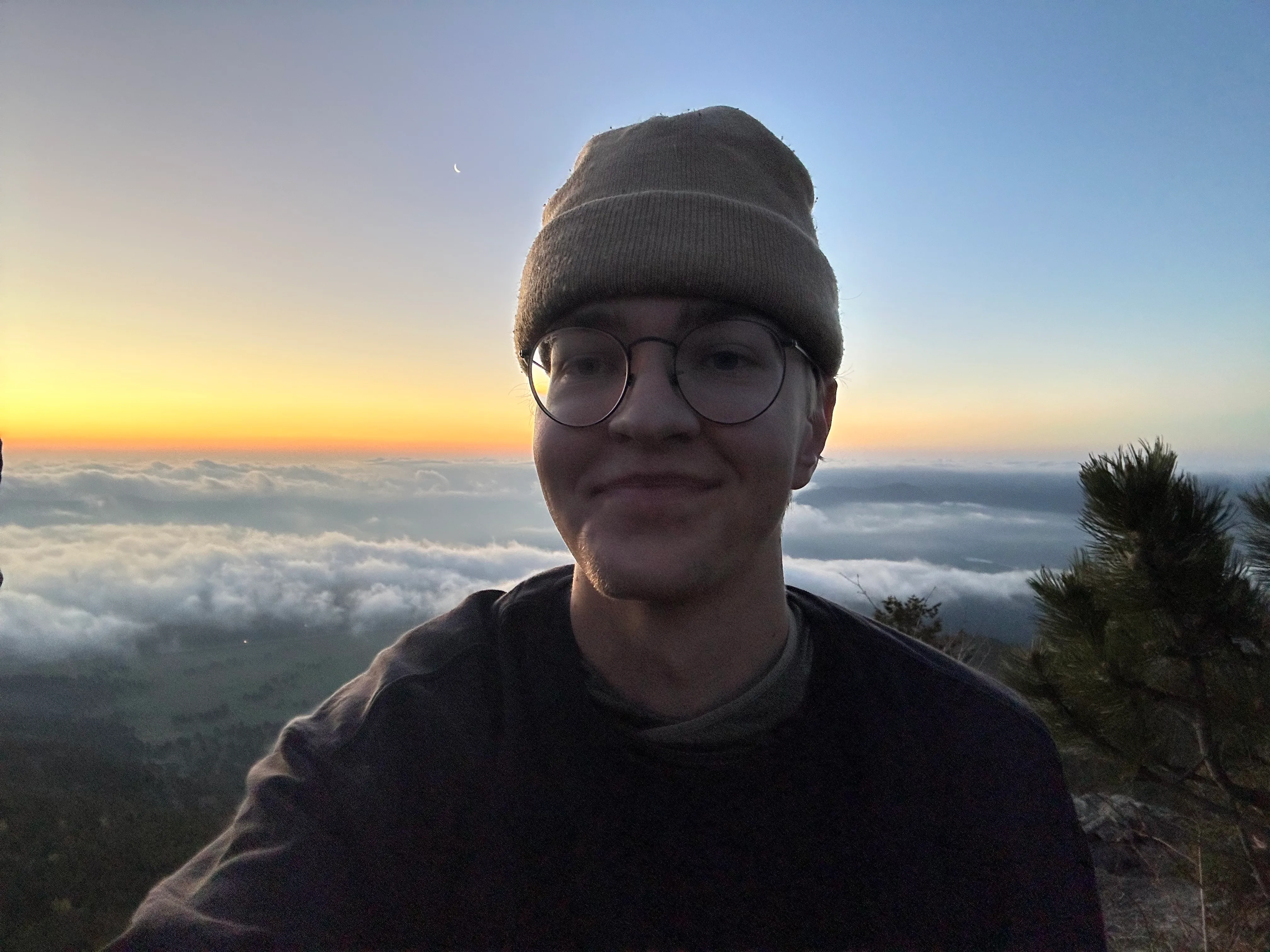
Cade Hanson was a Colorado-based videographer who had built out his own production studio and, when he wasn’t behind a camera, ran 100-mile ultramarathons through the mountains. This was the first time Isaac recorded an episode in person — at Cade’s studio, with their mutual friend Jaden Moore behind the camera — and the conversation ranged across everything that comes up when two friends who do the same work finally sit down together: building a business, taking real risks, the lessons that come from suffering on a trail, and why the hardest thing for their generation might just be talking to people in real life.
The Power of the 90-Day Meet-Ups
Isaac and Cade had been seeing each other every three months at meet-ups with other freelancers — gatherings that weren’t about passing work around or generating leads, just creatives in the same lane pushing each other forward. Cade’s logic for the cadence was specific.
“90 days is the optimal goal range where six months and beyond is too far out in the future that you don’t take action, and 30 days is too short to actually make a big dent in things — and 90 days is also when habits are formed.”
What made the meet-ups valuable wasn’t a single piece of advice or a deal. It was that everyone showed up bigger than the last time, and nobody saw that as coincidence. As freelancers, neither of them had coworkers — clients were friends, but the dynamic of “this person could walk away” never fully left the room. The meet-ups were friendships with no vested interest, the kind that never change.
“Somehow being around other people, pushing each other forward, allows us to put in more hours, better hours, and more thoughtful hours.”
How Cade Hanson Built His Studio
The most concrete thing to come out of those meet-ups was the studio itself. It started, Cade admitted, with jealousy — sleeping on the couches at Jaden’s warehouse office on a trip and realizing his own commute from bed to basement desk took longer than driving into a real workspace. Within two weeks of getting home he had keys. By the next meet-up, the place was built out and running.
But this wasn’t a vibes purchase. Cade had watched too many creators buy white-wall offices they never used because they had no plan. He wrote the whole thing out first — a two-page business plan he could actually explain.
“If your business plan can’t be understood by somebody in the field, it’s probably a sign that it’s not going to work… You should be able to explain your business to your mom and have her go, ‘it’s a good idea.’”
The risk framing he used stuck with Isaac: there’s a difference between dumb and stupid. Buying a studio without rent covered beyond two months is dumb — a calculated stretch. Buying one with no clients, no plan, and no idea what you’ll do with the space is stupid. Cade’s was firmly in the first category, because the need had announced itself over and over.
“I had a ton of shoots where the biggest roadblock either to closing or to a great user experience was having somewhere to shoot up here in the mountains.”
The buildout reflected a hard-won principle about gear, too: don’t buy something until you’ve needed it more than five times. Inside, 1,000 square feet split across three rooms — paper backdrops, a shiplap wall, a dramatic black room, wood paneling — with the same cameras moved between rooms in fifteen minutes rather than fifty grand of duplicated equipment. Three cinema cameras feed a single switcher he live-cuts like a video game, so clients often walk out with the edit essentially done. The biggest surprise wasn’t efficiency, though.
“The biggest surprise to having a studio is how much clients love the experience of it.”
The Fjällräven Shoot and Lighting as Recombination
One of the few projects that pulled Cade out of the studio was a shoot for the outdoor brand Fjällräven — a company that actually knew how to work with creatives, handling licensing and producing up front. The standout moment came when a repair center was under construction and off-limits. Instead of filming the real thing, Cade built a fake one in the middle of a warehouse aisle: a hard backlight standing in for the sun, racks of clothes, a desk dragged into the open.
“They looked at me like I lost my marbles… and so we got what looks like these morning rays coming through this dark cinematic repair shop.”
That instinct traced back to how Cade thinks about lighting in general — not as a bag of techniques but as recombination. You study how twenty different people light a kitchen, then borrow a move from one, a fix from another, and the negative lesson from a third.
“Every lighting setup is almost always a recombination of other ideas that you’ve seen… and that’s what makes lighting unique — just your recombination of existing ideas is what makes it unique.”
Why Cade Hanson Runs Ultramarathons
The other half of the conversation lived on the trail. Cade’s pitch for ultrarunning was that you get to live multiple lives in a single race — thirty to a hundred hours of moving through the mountains, with sunrises and sunsets and lows and breakthroughs that compress a lifetime into a day. The lessons rolled directly into everything else.
The biggest one was pain versus suffering. Your feet can hurt, your body can be shutting down — that’s pain, and it’s real. Suffering is the performance you layer on top.
“You can decide to continue smiling… People start performing pain where they have to scowl at this, complain about this. And then you just go, ‘yeah, you’re sore,’ and then you just walk.”
Ultras also taught presence in a way nothing else had. Asking how many aid stations are left is how you know someone’s about to quit; the only honest unit is the next step.
“There is no other time during a race than where you are in the moment.”
And running, Cade said, doubled as therapy — a way of occupying the body so completely that the mind is finally free to sort through the mess.
“During our days we hear so many new things… and without silence, without prayer, without reflection, we just have very messy brains.”
Touching Grass in a Fractured Generation
The episode closed on a thread both of them clearly cared about: how hard it’s become to think clearly when everyone lives in a different algorithmic world. Cade’s feed and Isaac’s feed don’t overlap, and that makes each one feel like the whole of reality. The fix is unglamorous — get off the internet and talk to the person in front of you.
“The thing that our generation needs to do more of is just touching grass.”
He tied it back to lighting with a metaphor that landed. Cheap lights have a low color rendering index — they look white but can’t actually reproduce a real red or blue, because they’re missing whole sections of the spectrum. Niche internet expertise is the same: bright in a few narrow bands, blind everywhere else.
“You need to have a broad spectrum of perspectives… grounding fills in those gaps where it might look like we have a bright light, but it’s not an accurate light.”
The most grounding thing in his own week, Isaac added, was coffee with unrelated local business owners talking about youth sports — stuff he’d never normally touch. You’re more likely to know a relevant world leader than your neighbor kitty-corner, and that imbalance is exactly the problem.
Key Takeaways
- Work in 90-day cycles. Six months is too far to spur action and 30 days is too short to make a dent — a quarter is long enough to build a habit and short enough to feel urgent.
- Know the difference between dumb and stupid risk. Dumb is a calculated stretch with a real plan behind it. Stupid is leaping with no clients, no strategy, and no idea what you’re doing.
- Wait until you’ve needed it five times before you buy it. Most gear and overhead can be rented or borrowed until the need is undeniable.
- Choose efficiency over quality more often than feels natural. Creatives default to maximum quality nine times out of ten, and nine times out of ten it’s the wrong call.
- Pain is real; suffering is optional. You can hurt and keep smiling — the performance of suffering only makes the hurt worse.
- Touch grass to think clearly. Your feed is a low-CRI version of reality; the only way to fill in the missing spectrum is talking to people off the internet.
Follow Cade on Instagram. Connect with Isaac at isaacjarnagin.com.