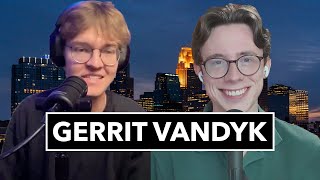
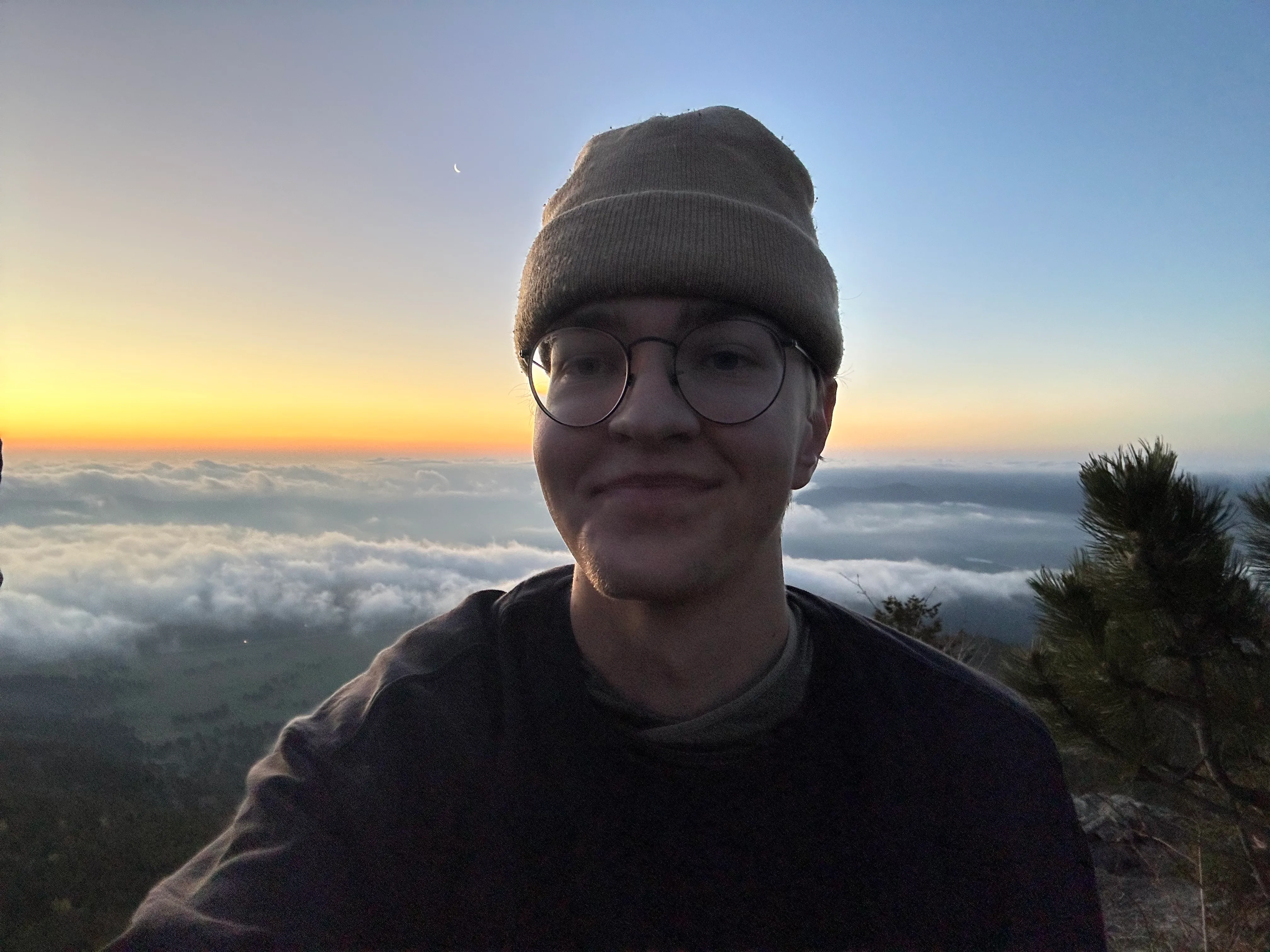
Vlad Nikiforov is a video creator based in Minneapolis, Minnesota — and by the time he sat down for this episode, he’d already lived more lives than most people twice his age. Isaac met Vlad through their mutual friend Henry, who connected them over social media before the three of them ever shared the same room. In this second episode, Vlad told his full story: Kyrgyzstan to Russia to Minnesota, going viral without really meaning to, and what it looks like to build a creative life without a roadmap.
The Journey: Kyrgyzstan, Russia, and a Green Card Nobody Expected
Vlad grew up in Kyrgyzstan until he was nine years old. The move to Russia wasn’t something he saw coming — he found out the family was relocating after answering a phone call from someone asking if they were selling the apartment. He told them no, hung up, and then learned from his parents that actually, yes, they were.
That move took him to Russia, then back to Kyrgyzstan when his parents felt homesick, then back to Russia again. In the meantime, his parents had been entering the US Green Card lottery every year since he was seven. In January 2015, his mom won — but the family didn’t find out for almost a year. They tried to log in to check her results, got the password wrong, and shrugged it off. A year later, his dad decided to check the previous year’s results, and there it was.
“Should we be happy about this? Should we be sad? It’s been a whole year, you know, it wasn’t make any actions. Is this real?”
Four months to get documents in order. September 2016: Vlad arrived in America. He was sixteen and didn’t speak a word of English.
How Vlad Nikiforov Found His Way to Videography
With no English and no friend group, Vlad spent his first two years in the US almost entirely at the gym. He discovered calisthenics through YouTube — stumbled onto a handstand tutorial and decided to try it. He worked on handstands every ten minutes throughout the day, and four months later he could hold one for one minute and twenty-seven seconds.
That was when he started filming himself and posting to Instagram.
About six months in, Henry DM’d him asking how long he’d been doing handstands. They started training together — Vlad biked fifteen minutes to a lake, met Henry’s dad, and managed to string together about two sentences of English. The first thing he ever said to Henry was: “Do you do pull-ups too?”
“I love meeting people. I always move around the world, so that’s something I had to adapt to.”
From there, the friendship grew into a creative partnership. Henry got serious about video while Vlad found himself building a friend group in high school and easing off the gas. Watching Henry “locked in the lab, working and cooking” eventually made the FOMO too loud to ignore. Vlad snapped back — started posting consistently, shot his first music video, and didn’t stop. The first episode with Will Hearn touched on how internet-to-real-life friendships become the foundation for creative work; Vlad and Henry are a textbook case of it.
Going Viral and What Short Films Actually Take
Vlad’s first viral video came from the phone/TikTok concept — footage that almost didn’t get made because he was deep in his own head about it. He wrote at the top of his notes: “Make the video that’ll blow up on TikTok.” Then he broke it down: what emotion, what message, what mood.
“I wanted to have something that’s really relevant to a lot of people out there, and then make them feel some type of way — but then show a good side of it.”
Short films became his thing from there. The turning point was a piece called Dreams Come True — he had been chasing visual effects and decided he wanted to step in front of the camera too, to build his own impact rather than always shooting for other people.
His creative process varied by project. Some of his best work started with audio — like the spiked ball video in suits, where he found a sound on TikTok and built the whole concept around it. He shot and edited that one in about twelve hours. Other shoots came together run-and-gun, worked or didn’t. He had developed the ability to recognize when an idea wasn’t pulling him in, and he had gotten better at stopping rather than grinding mediocre footage into something it was never going to be.
Balancing Paid Work and Personal Projects
At the time of this episode, Vlad was working part-time at Toyota while taking on video clients. His favorite paid work was music videos and commercials — jobs that stretched his creative side. Senior picture sessions paid the bills but didn’t do much else for him.
His benchmark for how manageable the grind was: he saved up for his first camera in three months working at a restaurant. Back home, his friends were doing hard physical labor for ten dollars a day. The contrast grounded him.
“There’s no way I would do that in Russia. You would have to take at least minimum a year of not spending any money.”
He wasn’t treating the part-time hours as dead time either. At Toyota, he used shifts to listen to audiobooks and podcasts — learning in the background so that when he got home, he could go straight to editing, shooting, or training without needing to wind down first.
The goal was full-time creative work. That was always the destination.
What Moving Around the World Did for His Perspective
One of the sharpest threads in this conversation was how Vlad’s background shaped the way he looked at opportunity. His friends in Russia were grinding for wages that wouldn’t cover a fast food meal in America. He had worked retail here and made more per hour than felt real by comparison. That gap wasn’t abstract to him — it was the fuel he came back to when things felt hard.
“Every time I get caught up in my thoughts and get stressed, I just think back. I’m like — I’m doing just fine.”
He was matter-of-fact about how much people who grew up in the US sometimes couldn’t see what was right in front of them. Not judgmental — just honest. The difficulty of building something as a young, self-employed creative felt completely different when the baseline was a world with fewer doors.
Isaac echoed it from his own angle: the grind felt better when you had people around you doing the same thing. For both of them, the circle of friends working in parallel — Henry, Vlad, Will — made the uncertainty feel less like flailing and more like something shared.
Key Takeaways
- Perspective is a competitive advantage. Growing up across three countries gave Vlad a concrete baseline for what “hard” actually means. That reset button made American opportunity feel real, not motivational-poster abstract.
- Start with the feeling, not the plan. Some of Vlad’s best work came from finding the right audio first and building the concept backward. When the emotion is locked in, the shoot follows.
- Know when to stop. Learning to quit on footage that isn’t working — rather than forcing it into something mediocre — is its own skill. The projects worth making carry you for 24–48 hours without losing steam.
- Use idle time deliberately. A part-time job doesn’t have to pause your growth. Vlad used work shifts for audiobooks and podcasts so his creative hours at home stayed focused.
- The friendships that start over shared work compound. Vlad and Henry connected over calisthenics videos and ended up building a years-long creative partnership. Starting with something real in common beats almost any other way in.
Follow Vlad on Instagram. Connect with Isaac at isaacjarnagin.com.