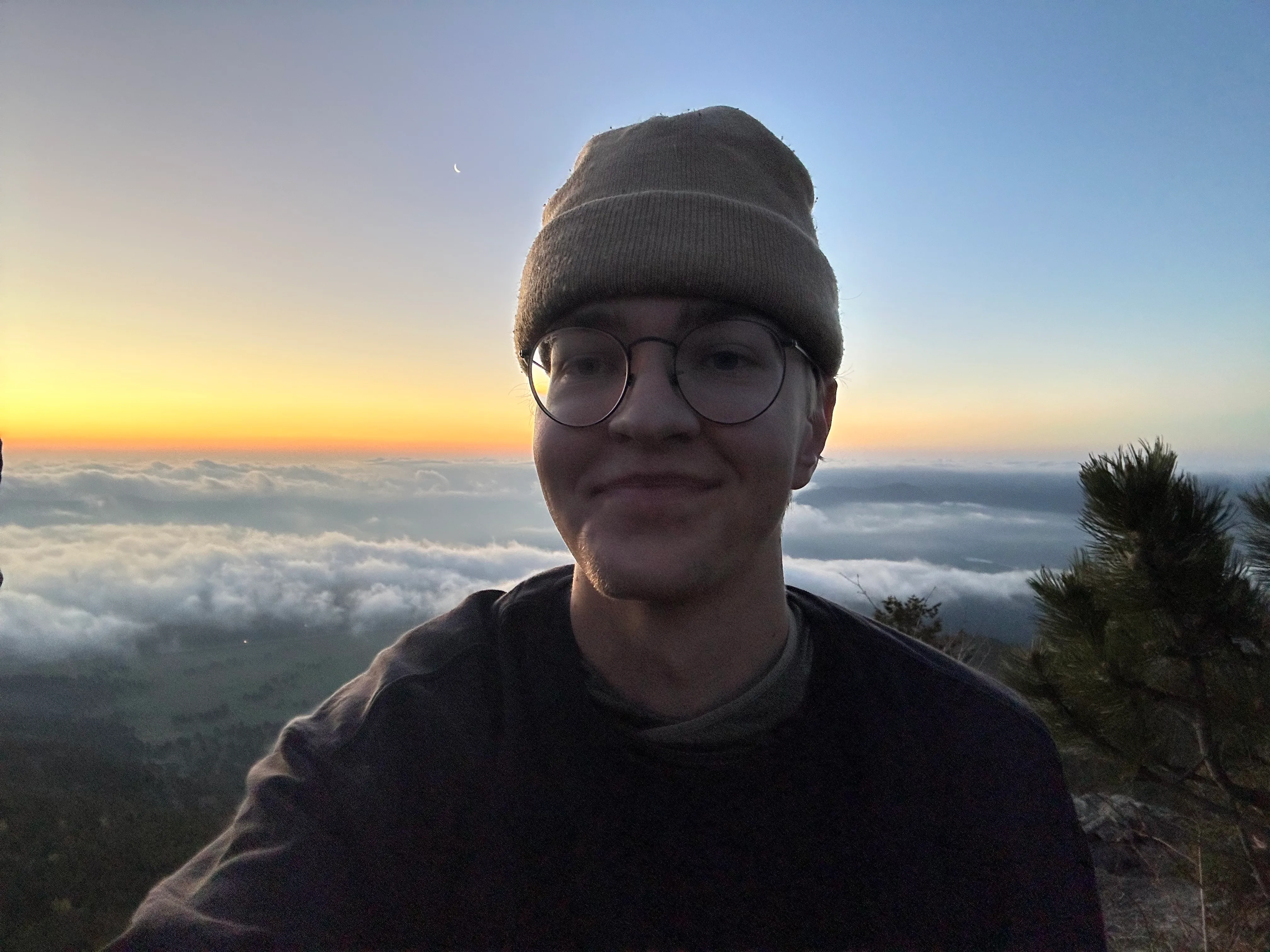
Austin Sugerman is a full-time student at James Madison University, co-founder of Ambient Media Corp — an outdoor-focused video and photo production business — and the founder of JMU’s Video Adventure Club. He and Isaac had been in each other’s orbits for a while and nearly crossed paths during the road trip Austin took right before this recording. The conversation covered a lot: 7,500 miles through the American West, how to stay present when you have a camera in your hand, the outdoor niche Austin is building toward, and why creatives who only do client work eventually stop creating altogether.
7,500 Miles Out West
Austin spent the summer before his junior year in a car driving from Virginia to Colorado, Wyoming, Montana, Canada, and back. Five people, two cars, a 50-plus-page Google Doc of spot ideas, and a loose plan to spend four-ish days in each place.
“Destroyed my car in the process but definitely worth it — so I think we drove it like I want to say like 7,500 miles.”
The highlights came fast. Rocky Mountain National Park to start. Then Wyoming’s Wind River Range — two hours down a dirt road with no service to reach the trailhead, Grizzly country, and some of the most remote terrain in the lower 48. The Grand Tetons came next, the same barn Isaac had visited and filmed earlier in the year. Then north into Montana’s Glacier National Park — car trouble cut that stretch short, but a hike to Avalanche Lake and a sunset at Lake McDonald made it worth the stop. Canada was the peak of the trip for Austin: Banff and Yoho National Park, mountains that go from flat ground to vertical in a way he hadn’t seen anywhere else.
“Just how it goes from like zero to a hundred like so quick — and it’s just insane.”
On the way back: the Badlands, Devils Tower, and home. The car survived. Barely.
Presence vs. the Shot
Austin had been shooting for about three years at the time of this recording, and one of the things he’d had to actively learn was how to hold a camera without disappearing behind it.
In the beginning, it was all about getting the content — every moment was a potential shot, and that focus pulled him out of actually experiencing what was in front of him. He’d spent the years since trying to find the middle ground: motivated enough by the creative work to get up for sunrise, present enough to actually be there when it happens.
“In the beginning I would only care about like getting the photo, getting the video, and it kind of takes you out of the experience — it makes you less present. So I’ve been trying to like find that perfect middle point.”
The road trip was a test of that balance, and by his read he passed it. He kept his routine — staying active, organizing footage at night, staying in a groove even across six states. That structure, he said, is part of what made the trip enjoyable rather than exhausting.
“I like being in kind of my same groove but just in a new location.”
He also decided two days into the trip to make a short film from the footage — not because he had to, but because the material was there and it felt right. Distributing cameras to friends, collecting everything, putting his name on something he was genuinely proud of. That was the goal.
Ambient Media Corp and the Outdoor Niche
Austin’s business, Ambient Media Corp, does video and photo production for brands and companies — primarily in the outdoor and lifestyle space. Current work included a local ski and mountain bike resort. The longer-term target: collab-level work with outdoor brands like Red Bull or National Geographic, staying self-employed while building toward clients whose identity actually matches the work.
The challenge right now is the same one most early creative businesses face: you can’t say no yet. Wedding work, winery shoots, events — none of it is exactly the niche, but it pays for gear and builds the portfolio that eventually lets you narrow.
“Long-term I feel like if you want to reach the point where you’re doing stuff that you really enjoy all the time you need to find a niche and get really good at it — and it’s hard to progress to that point where you’re only going after those specific jobs you want to do.”
He was clear-eyed about it: the outdoor niche is the target, winery work is closer to it than most people think, and the path there runs through a lot of saying yes before you can say no.
One lesson that shaped how he thinks about the business came from a podcast about Steve Jobs — specifically about Jobs’s ability to find people who were exceptionally good at their craft and completely reliable, then trust them fully. Working with his business partner had made that lesson feel real in practice: knowing you can hand something off and not worry about it is worth more than almost any other quality in a collaborator.
“I would say like number one just make sure you can like trust who you’re working with — and pick people that are really good at what they’re doing.”
The JMU Video Adventure Club
About four and a half years before this episode, Austin looked around James Madison University and didn’t see anyone else making videos. So he started a club.
“It wasn’t like this super planned out thing in the beginning — honestly it was just like I don’t know anyone else that makes videos at JMU, let me see if I can reel them in.”
The club had grown to over 110 members by the time of this recording. That fall Austin stepped back from the president role entirely — no more logistics, no more organizing trips, just showing up and filming. The people running it were good, and watching something he built keep growing without him had its own kind of satisfaction.
The club also turned out to be the confidence foundation for everything else. Starting something from scratch, watching it grow into something real — that experience directly preceded launching Ambient Media Corp. One built on the other.
“I never started anything before that — I think that starting the club was honestly the thing that gave me the confidence to get Ambient up and going.”
A small world moment from this episode: Isaac mentioned Sydney Marvin, one of the first creators he’d connected with online back in 2020 — someone from an early global group chat of creatives. It turned out she went to JMU and had joined the club. Austin ran into her the same day as this recording.
Keep Making Things for Fun
The clearest throughline in this episode wasn’t about the road trip or the business — it was about what happens when creatives stop making things for themselves.
Austin described falling into a pattern earlier in the year where all his creative energy went into client work, and personal projects quietly disappeared. No fun stuff, no random YouTube videos, nothing made just because it felt right to make it. His read on where burnout comes from was direct:
“I don’t know I kind of fell into that this year a little bit where I would only focus on like the work side of things and then I totally stopped making anything fun — which doesn’t really help your creativity a whole lot. And I mean that leads — that’s honestly probably like the reason most people end up burning out.”
The reset came from a camping trip and a solo camping YouTuber he stumbled onto the night before leaving. He set up a tripod, shot whatever was happening, came home, and cut a YouTube video from it — not to perform well, just to make something.
“It just feels good to make stuff even if it’s not like the best thing you’ve ever made — just good to be in that process.”
Isaac connected with this from his own side — Ryan Doser talked about the same treadmill trap in episode 11, where all your output becomes reactive and nothing compounds. The answer, for both of them, is the same: keep a lane open for making things just because you want to.
Key Takeaways
- Presence is a skill you build over time. Getting the shot and being there aren’t mutually exclusive — but finding the balance between them takes practice, and it doesn’t happen automatically.
- Say yes early, niche down later. You can’t turn down work you don’t fully want until you have the gear, portfolio, and clients that let you. Build first, then narrow.
- Trust is the most valuable thing in a business partner. Knowing you can hand something off and not worry about it changes everything about how you operate day to day.
- Starting something is its own credential. Austin’s club gave him the confidence to launch a business. Building one thing proves to yourself that building things is possible.
- Keep a lane open for fun. Client work alone dries up creativity. Making something with no brief, no client, and no expectations is how you stay in love with the craft.
- Your routine is portable. Keeping the same habits — moving, organizing, staying in a groove — in a new location is what makes a long trip sustainable instead of just exhausting.
Connect with Austin on LinkedIn. Connect with Isaac at isaacjarnagin.com.