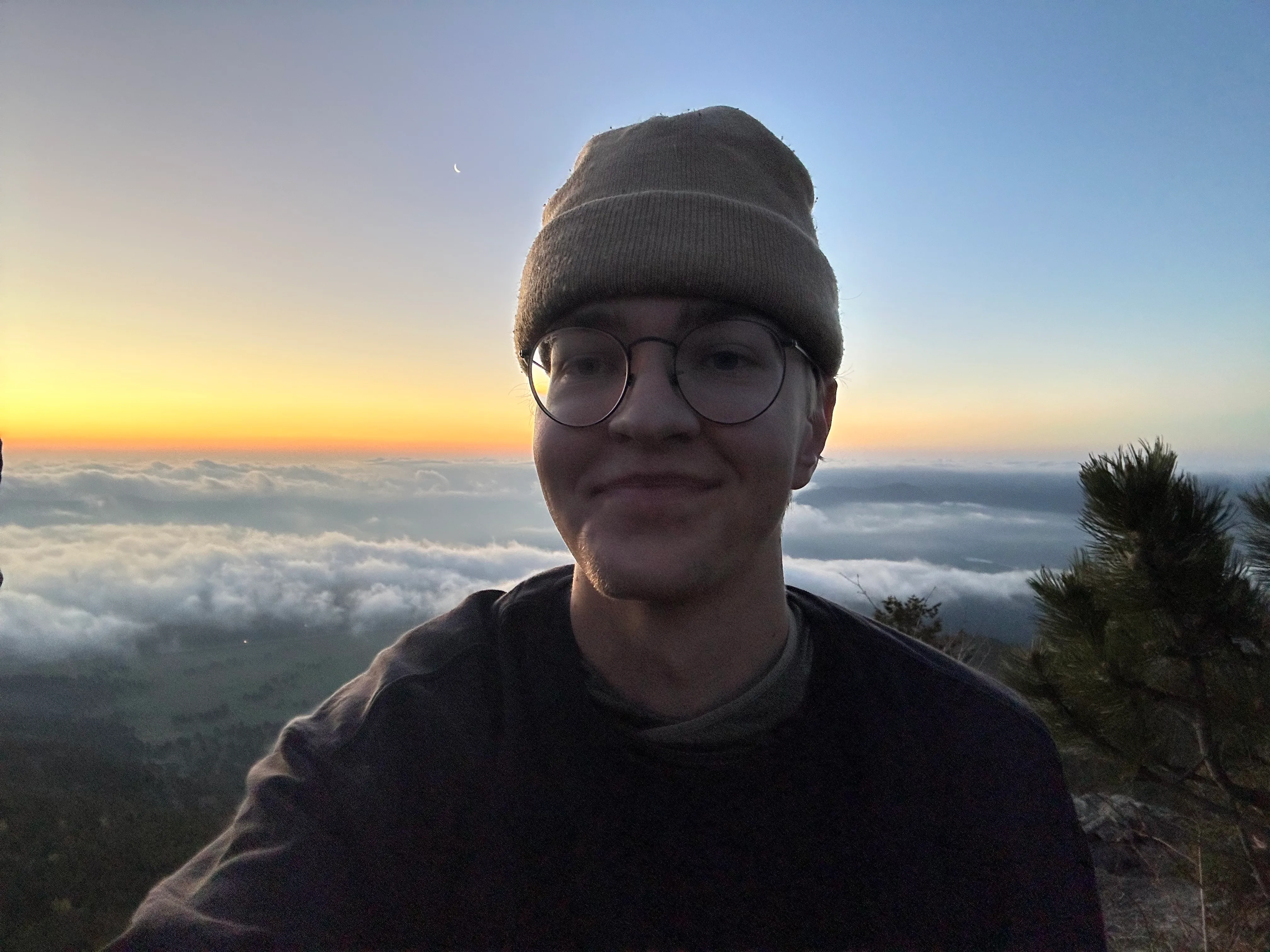
Melly Ullah is a University of Central Florida student in Orlando, a videographer for UCF’s athletic department, and someone Isaac had been following online for years before they sat down for this conversation. He’d been a consistent presence in the same creative circles — always building, always posting — while simultaneously pursuing an interdisciplinary degree in computer science, graphic design, and marketing. The episode covered the UCF intern grind, the Glizzy Gobblers group chat that launched his creative career, the freelance feast-or-famine cycle that pushed him toward CS, his first time directing on a Red camera at an abandoned resort, and what it took to stop making content for the algorithm.
UCF Athletics and the Intern Grind
UCF’s football media program runs lean. The budget is thin compared to other schools, the gear is sometimes their own, and the crew shows up anyway. None of that had slowed them down.
“UCF definitely is one of those poverty programs when it comes to the media team — but the crew still kills it every time and we make the most of what we have.”
Melly handled fan shots and tailgates, editing in real time. UCF’s first home Big 12 game was sold out, they were blowing out the opponent, and he was already deep into an edit by halftime. Then the fourth quarter happened and the lead disappeared. The edit got shelved.
An away trip to FAU gave him a different kind of win. He’d heard Alex Hampstead shot content for FAU, asked about riding the workers’ bus, and made it happen. Meeting another creator working the same lane was the highlight of the trip — even if opposing fans made it uncomfortable.
“There definitely is a lot of hate from the other team — going on content to another team’s field. Some of them were coming at me personally. I was like, damn, it’s really not that serious, I just do this as work.”
How Melly Ullah Found the Camera
It started with YouTube men’s fashion channels.
“I watched those channels on YouTube teaching men’s fashion or how to take care of yourself as a guy and I was like, wow, I want to be that guy — but for teenagers.”
He and a friend started filming — morning routines, night routines, back-to-school shopping guides. Then the friend got a girlfriend and disappeared. Melly got a camera and kept going on his own. A few days in, he found Sam Kolder — travel videography at a scope he hadn’t known existed.
“I somehow discovered Sam Kolder and I was like, never mind, scratch all of that — I want to be a travel photographer.”
Family trips became shoots. A New York montage he never finished. A hard drive that failed and took the early footage with it. None of it stopped him. The camera bought for YouTube fashion content eventually took him to football stadiums, concerts, and a T-Mobile ad shoot.
The Glizzy Gobblers and What That Group Chat Built
The turning point wasn’t a gig. It was a group chat.
Melly had a friend who rapped and needed a music video. Melly had a bigger idea: pull together several creators from different parts of the world — none of them big yet — and build one video from multiple visions. He reached out to Matias Mena to get it started. Matias made a group chat. Named it the Glizzy Gobblers. The music video never happened. The group chat stayed.
“That small little canon event led to where I am today — that group chat gave me so much purpose. I was just doing it because I had a camera in my bedroom.”
Watching the level of other creators in that chat made him take his own work seriously in a way nothing else had. Within a few years, nearly everyone from that original group had built something real.
Matias stayed central to all of it — treating every creator the same regardless of size, the person Melly credits above everyone else. When a concert opportunity came up, Matias didn’t just connect him. He flew from California to Florida and stayed for a week to film alongside him.
“That is the most G [thing] I’ve ever witnessed. Matias will always be my number one inspiration.”
Isaac shared a version of this from his own side — Josh Horton from episode 10 had been someone he’d only known online until a trip to Michigan, where by day two it felt like they’d always been friends. For both of them, the creative relationships that started online had become the most significant ones in their lives.
The Freelance Hustle and Why He Chose Computer Science
The T-Mobile gig came through the network. Matias connected Melly at exactly the right moment — he was walking toward a beach with no reception when the message came through. A few minutes later and it would have gone to someone else.
The job was simpler than it sounded: move a tripod, suggest angles, turn edits fast while boarding a flight. Multiple tight-deadline revision rounds, and a reel that later went wide — credited to T-Mobile, no mention of Melly.
“They didn’t credit me or anything — but I know. You know what I mean?”
A wrestling client came next through Respective Collective — flights covered, another solid project. A few other jobs stacked on top. It was a strong run. Then the next month came and there was nothing.
That cycle is why computer science. His interdisciplinary degree blends CS, graphic design, and marketing — pointed toward project management at a company where all three would matter, a stable foundation with video running alongside it.
“I’m doing it for the money — no matter how big I get in the video side, the industry we’re in is not stable.”
First Time Directing on a Red Camera
His friend and DP had the gear — expensive lights, a Red camera, the full setup. The artist, a childhood friend Melly had been filming since they were kids goofing around with a camera, was moving to LA in two days. Melly had never directed with real pre-production. They scouted an abandoned resort.
When they arrived, sheriffs were parked at the back end of the property. Everyone wanted to cancel. Melly said no. They’d already driven an hour.
They got in, shot the scenes, and hit 3am on a stretch of road that needed a car rig — one nobody had the tool to secure. Melly took his belt off.
“I just took my belt off, put the belt around the camera, somehow secured it, we got the shot and wrapped it up.”
Directing itself was new territory — not just pointing a camera but holding an image of the full video in his head before any of it existed.
“Adding in a vibe, adding in an image of what you’re creating before you even create it — that’s one of those things that are not easy and I’ve never really done that before.”
Creating for the Feeling, Not the Feed
For a while, Melly had let Instagram function as a quality meter. Hundreds of hours into an edit, post it, watch the reach number. When the algorithm didn’t push it, he took it personally.
“Every time I would post I would put in a countless amount of hours — and all those hours had to be redeemed by people commenting, reposting. But that’s not really up to the people, it’s up to Instagram.”
He stepped back, came back to why he started, and made a video once when he wasn’t feeling well — handheld shots of a hike, running through a field — and watched people say it felt calm without him having to explain how he was feeling.
“People are seeing how I feel without me having to write some embarrassing words about it. I don’t need them to like it, I didn’t need them to comment — that’s just what I wanted from the video and I got that.”
Andrei Gesmundo came up as a working example of what this looks like at scale: create your thing, film your life, go to concerts and festivals, and eventually the right client sees it and wants exactly that. Don’t sell the work. Sell yourself through how you work.
The version Melly had always wanted was the Sam Kolder version — on tour with an artist he loved, documenting something real. Henry Smisek from episode 6 had gone out on the Logic tour, and when Logic publicly appreciated him at a concert, Melly said it sent him straight to his family.
“I think that’s funny you say that — I sent that video to my mom and dad and said, this is what I do this for.”
Key Takeaways
- Underfunded doesn’t mean underperforming. UCF’s media team runs lean and shows up anyway. Dedication is its own credential.
- The group chat is the gig. Melly’s best opportunities trace back to a group chat formed around a music video that was never made. Show up, make the connection, let it compound.
- The feast-or-famine cycle is real. A strong run of freelance work can go quiet fast — which is why a second skill set isn’t selling out, it’s strategy.
- Get the shot no matter what. Belt on the car rig at 3am, trespassing with sheriffs nearby — something beats nothing every time.
- The algorithm isn’t a quality judge. Instagram not pushing your work doesn’t mean it isn’t good. Create for the feeling first and let reach be a side effect.
- Create your thing and the work finds you. Andrei Gesmundo wasn’t pitching concert clients — he was making his own content until someone needed exactly what he’d been doing all along.
Visit Melly’s website at mellyullah.us. Connect with Isaac at isaacjarnagin.com.