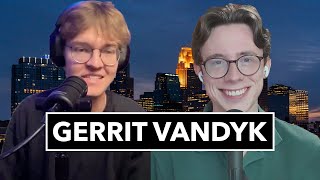
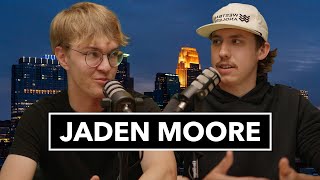
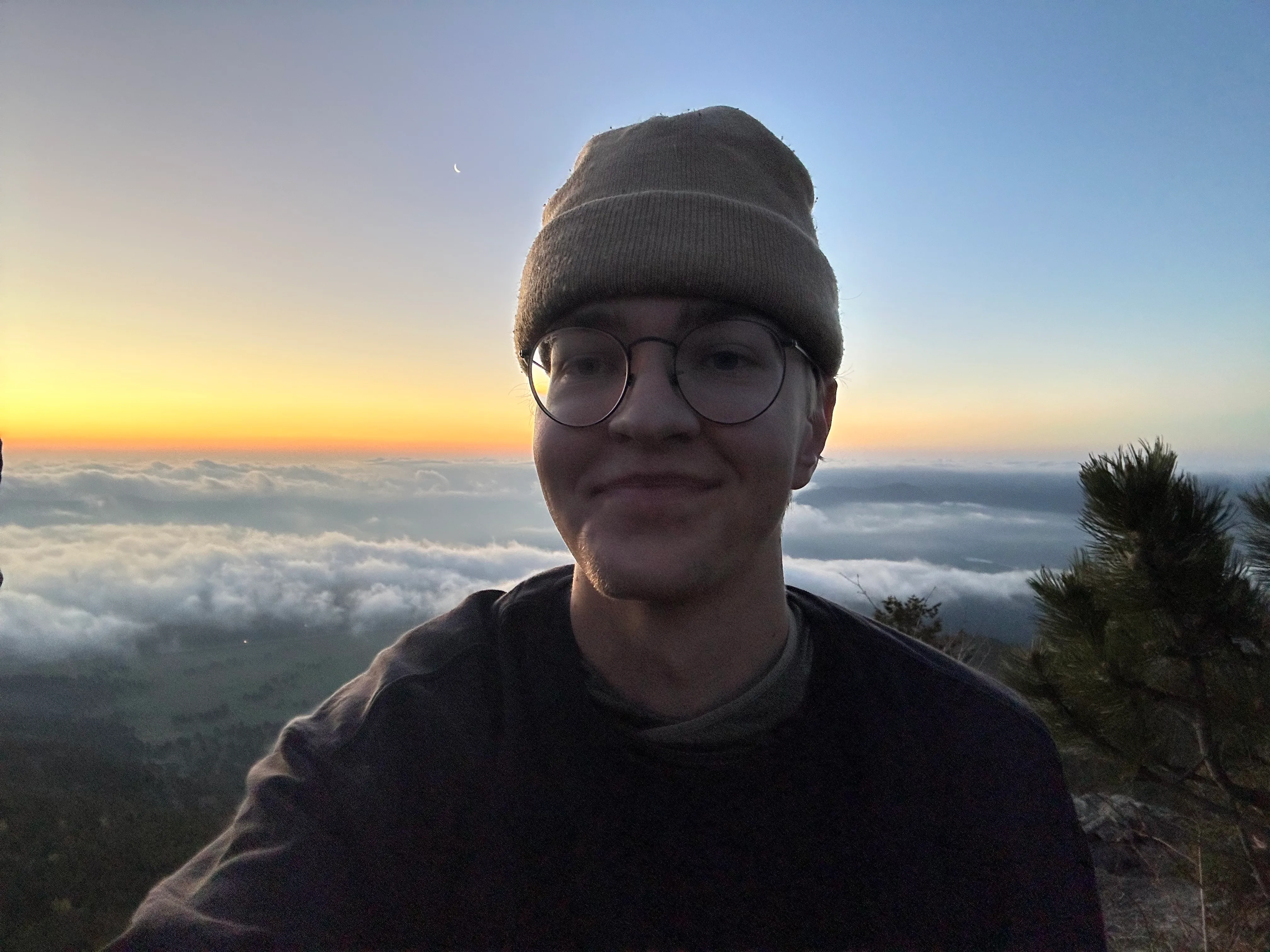
Josh Hild is a Minneapolis-raised street photographer, urban explorer, and full-time nomad who had spent two years living out of a Honda Fit with his wife, moving from house sit to house sit across the West Coast. Isaac and Josh had met in person on a street photography night in Minneapolis and had followed each other’s work since. The episode covered how a tech-savvy dad and a failed nursing program set Josh on a path toward film and eventually photography, what drove him to go out and shoot every other night after a day job he hated, the puzzle-solving obsession behind Minneapolis rooftopping, and how uploading work for free to unsplash.com and pexels.com became one of the best business decisions he ever made.
Growing Up and Getting Into Photography
Josh grew up in a small town in southern Minnesota, just a few miles from the Iowa border — his best friend went to college at Luther College in Decorah, his brother down to Drake in Des Moines. His dad was a tech guy, always bringing home broken laptops and computers, tinkering with them and teaching Josh about processing power and hardware. Small town, not much else to do.
He tried a few directions before photography stuck. He wanted to design video games, then pivoted to nursing, studied anatomy and physiology, found out fast it wasn’t for him. What had been running alongside all of it was a high school habit of making dumb sketch comedy videos with his friends — inspired by old YouTube groups — filming and editing in Sony Vegas and Premiere Pro.
“That was my real start with the camera — but I didn’t really have a huge interest until the nursing thing didn’t work out.”
He transferred to the University of Minnesota to study film production. From there his first photography job was an internship at Skyway Theater in Minneapolis, shooting events for the electronic dance music scene. He loved it. He started building his portfolio on the side, going out after work to photograph the city — the Stone Arch Bridge on the Mississippi was one of the first spots.
How Josh Hild Built His Street Photography Style
The job that defined his early grind wasn’t the glamorous one. He spent five years doing photo and video work for an LED lighting company — product photography, how-to installation videos, the cycle of 8 to 5 — and used every evening he could carve out to go shoot outside.
“My goal was to just keep expanding my portfolio every time I could get off work. It was still photography and video work, which I guess I’m still grateful for — but yeah, after that it was just like I would do anything to try and get out.”
Night photography became his thing partly by choice and partly by schedule. By the time he got off work it was dark, and he found something in that constraint he hadn’t expected. Dark backgrounds and small pockets of light gave him a frame to work within instead of being overwhelmed by everything a daylit scene throws at you.
“The lights being dark and being able to focus on little pockets of light really helped me kind of develop a process and a style that was a little bit more simple at the start.”
That style stuck. Rain, snow, conditions most people would use as an excuse to stay home — those became his best nights. The street photography scene in Minneapolis was small at the time and he connected with other photographers through Instagram, slowly building real friendships. One of those connections eventually led to meeting Henry Smisek from episode 6 — first through the Glizzy Gobblers group chat and other creative circles, later crashing on a cot in Henry’s room the first time he came up to Minneapolis. Those friendships were what made the city feel like home.
Rooftop Exploring in Minneapolis
One of the photographers Josh followed early on posted a shot from a rooftop in Minneapolis with a view he’d never seen before. He messaged the guy asking how he got up there. No real answer came back. So he spent a long time on Google Maps — 3D view, zooming around near the river — trying to reverse-engineer which building it was from.
He eventually found it. There were locks. No obvious way in.
A Chicago street photographer he’d been following came through Minneapolis not long after. They met up and went out. He had done some rooftopping before and showed Josh a few ways to work around certain doors, and they got up to the roof Josh had been studying for weeks.
“It was kind of like an addicting thing because I’ve kind of been an adrenaline junkie for at least as much as I could have been growing up — playing sports, playing paintball, bridge jumping into rivers.”
What made it more than just adrenaline was the puzzle. Every building was different. Every day was different. Hotels were easier than office buildings — office buildings closed at six, but hotels had 24-hour traffic. Older buildings had better odds. He studied Google Maps’ 3D lobby views, watched YouTube videos of elevator enthusiasts to figure out which floors required key cards and which didn’t. He looked for older buildings where the doors might just be open.
“Each building is different on different times, different days. One day might be a complete bust — and for an easy rooftop I’ve been on before, it’s like security seems uptight today. You feel it.”
The goal was always to leave no trace — no damage, no graffiti, nothing left behind. He was clear about the type of people he wouldn’t go with: guys there to dangle off the edge, or showing up dressed in all black looking suspicious. The whole approach was built around blending in, walking in like you belonged there.
“I’m there to go up, get pictures, go down without leaving any trace, not damaging property. I’m not throwing stuff, I’m not using graffiti. I just want photos. And I’m getting out like no one was ever there.”
The rooftop community in Minneapolis stayed small and tight-knit on purpose. Posting the really hard-to-access spots would bring traffic that could ruin them. You only shared access with people you trusted. Henry and his longtime collaborator Vlad Nikiforov were two of those people, and the night Isaac came up to Minneapolis was part of that — Josh had scouted the spot ahead of time, knew it was manageable for a group, and brought them all up.
“I always say like — that was just a hangout spot. We just walked in with our backpacks and went up.”
Unsplash, Pexels, and the Portfolio Play
Josh had been uploading work to Unsplash and Pexels for years — free stock photo platforms where anyone can download full-resolution photos at no cost. He started as a portfolio play: Instagram compressed everything, cropped everything, and rewarded the algorithm over the work. He wanted his photos to exist somewhere they could be seen at full quality.
The conventional take is that giving work away is a bad deal. His experience said otherwise.
Freelance gigs started coming in from people who found him through those platforms. Art consulting companies reached out. A bigger client in Minneapolis put him on their list for upcoming shoots specifically because their graphic designer had found his portfolio on Unsplash.
“All these clients reach out and say, hey, we’ve got some projects coming up. We have you at the top of our list to go shoot these things because we’ve seen your portfolio on these sites.”
The downsides were real. He’d found his photos showing up on Etsy — someone adding a filter and selling them as prints. The more personal discovery came during a real estate photography job: he walked into a Minneapolis condo and recognized three of his own prints framed on the wall. A local art consulting company had been printing and placing his work without telling him.
“I was proud and super happy but very pissed off. Like I didn’t know what to feel.”
He reached out. The company paid for some work, but he still didn’t fully trust them. Even Henry had spotted one of Josh’s photos hanging in an apartment building he was touring in Minneapolis — and called him immediately.
“I have people that recognize my work — taking care of me, looking out for me — and they appreciate my work more than the person who’s selling it.”
He’d become more selective over time about what went up for free versus what he held back for his own print sales. The math still favored the platforms — the opportunities that had come from that exposure outweighed the theft.
House Sitting, the Road, and What’s Next
Josh left Minneapolis in late March 2021. Getting out had been the plan for years — he’d felt stuck, needed to see other places, and then met the person who had a system for doing exactly that.
His wife had already been living nomadically for a few years before they met, doing house and pet sitting, staying in places for weeks or months at a time through platforms like Trusted House Sitters. Their first real date was a week driving through Oregon together, living out of her car.
“That was like the true testament of a first date — if you can travel with someone for a full week, then you can do anything.”
The leaving process took about a month and a half. He’d come home from work every day and get rid of something else — clothes to Goodwill two blocks away, gear sold off, 90% of everything gone before he walked out.
“That was one of the best things to learn — that you don’t need that much to live. All you need is your phone, your headphones, and your camera. Your backpack and you’re just good to go.”
Two years on the West Coast taught him what he actually needed in a place. A gym nearby. Clean streets. A skyline he could look at and feel good about. He’d been harder on Minneapolis than it deserved while he was there.
“That made me grateful for Minneapolis and the Midwest. It’s a beautiful and clean city.”
Seattle felt right. The plan was to stay stationary for a year or two, rebuild income through real estate photography and freelance work, invest, and then travel again — this time internationally. He’d started hosting Pexels community photo meetups in Seattle and wanted to build something similar to what he had in Minneapolis: a loose crew of photographers who wanted to go out and shoot together, no follower count required.
“It doesn’t matter the size of their Instagram account — if they want to go and take photos and they do street photos, that’s awesome. I just want to meet and connect with people and make friends.”
Key Takeaways
- Go out when you don’t want to. Josh went out in the rain and snow after an 8-to-5 job because the conditions made for better photos. Those were the nights that built his style.
- Constraints can accelerate a style. Dark backgrounds and pockets of light simplified the frame when full daylight felt overwhelming. Working within limits can get you somewhere faster than working without them.
- The rooftop is a puzzle, not just a stunt. The research, the timing, the reading of a building’s traffic — the mental challenge was as much the draw as the view at the top.
- Free platforms can generate paid work. Unsplash and Pexels led to inbound gig opportunities and client relationships that Instagram’s algorithm never surfaced. The exposure compounds quietly over time.
- Giving away work has real costs. Theft happens — prints placed in condos, files resold on Etsy. Know what you’re uploading and make peace with the tradeoff before you do it.
- You don’t need much to move. Getting rid of 90% of everything taught Josh what actually mattered. A camera, a gym nearby, and someone to explore with turned out to be the essentials.
Follow Josh on Instagram. Connect with Isaac at isaacjarnagin.com.