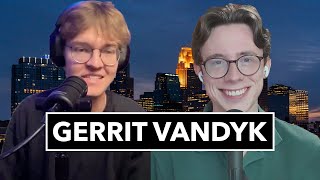
Kristopher Villa is a Chicago-based filmmaker and color grading specialist finishing up a marketing degree while building a freelance creative career on the side. He and Isaac had been in the same online creative circles for a while before sitting down for this one. The conversation covered the leap from the suburbs into the city, what clicked when Kris started doing event work for Arc’teryx, his full DaVinci Resolve color grading workflow, and a longer stretch at the end about faith, community, and why always chasing the next high is a faster path to burnout than most creatives expect.
From Freelance Editor to Something More
Kris had been editing enough to make a living — word of mouth, freelance gigs, a steady stream of work coming in from people who liked his fast-cut style and clean color. But he’d started to feel the ceiling.
“I don’t think editing is like my purpose in life so I’m just trying to figure out like where I can go from there and just continue to build.”
The shift he was making at the time of this recording was deliberate: pull back on editing volume, move toward DP and directing work, take on fewer but higher-paid gigs and use the freed-up time to figure out what he actually wanted to build. He put the split at roughly 70/30 — most of his time going toward his own content and creative development, the rest toward client work that covered the bills.
What made that balance possible was having clients he’d earned through genuine relationships rather than cold outreach. The work came through friendships first, skill second.
“Just having genuine friendships with these people — that’s probably the best way that I could put it. I’ve gotten connected into it and my skill has gotten me so far, the rest has just been like going out to meet people.”
The Chicago Move
For most of his life Kris had lived in the suburbs — comfortable, familiar, and two hours from everything he actually wanted to be doing. Then a friend offered him a room. He thought about it for a few days. He took it.
“From the moment that I got here it was me being in a new environment that I never would have thought I would have been in because I was so far away from the city — which has been a blessing because now I can go do these gigs that just come out of nowhere.”
The distance had been doing more damage than he realized. When a gig or a collab came up in the city, the commute had become a convenient reason not to go. Living five minutes from downtown removed the excuse entirely.
“When I was at home I would make reasons for me to not go because of like the distance — but when you’re here in the city and you’re so close to like all these opportunities it’s like it’s a no-brainer to just go out and do it.”
The apartment itself became part of the setup. Old building, exposed brick, renovated interior — the kind of space that looks good on camera without any effort. He noted he could put his camera on the kitchen counter and get a usable shot without touching a light.
Arc’teryx and Finding the Right Work
About a year before this recording, Kris started doing event recap work for Arc’teryx in Chicago. It was his first real foray into event video — before that he’d been figuring out whether portraits, corporate work, or something else was his lane. The Arc’teryx shoots answered that question.
“It was never something that when I would work with it would feel like exhausting to me — it was always very fulfilling.”
What clicked wasn’t just the brand. It was the energy of being around people. Event recaps put him in a room full of movement, personality, and unscripted moments, and he found out he loved it. The people — not the footage — were the point.
“It’s not necessarily about like what I’m filming — it’s more about like the people and like how is it interconnecting with them.”
That realization reshaped how he was thinking about the direction of his career. The work he wanted wasn’t defined by a deliverable or a format — it was defined by whether the room felt energizing. Arc’teryx was always the former.
Kristopher Villa’s Color Grading Workflow
The color conversation in this episode is one of the most detailed in the pod. Kris shoots on a Sony A7S III in S-Log 3 and edits entirely in DaVinci Resolve. For bigger projects he records to an Atomos Ninja V in raw format, giving him even more latitude in the grade.
His workflow starts with Phantom LUTs — specifically a conversion LUT that takes S-Log footage into DaVinci’s Cineon Film Log color space. From there he builds in layers: base correction, hue adjustments, tracked elements, final style touches.
“I think of it as like a cake — you have like your base which is like your conversion LUT and then you start adding these layers that make it stand out. You’ll start from things that are so significant and you slowly build to like the final touches.”
For event work and anything with a more cinematic feel, he uses a Moment CineBloom diffusion filter. Most viewers can’t identify what it does — they just know the footage feels more filmic. That’s the point.
His argument for taking color seriously went beyond aesthetics:
“Can this color convey an emotion? If you have a very vibrant edit like that itself is gonna be very uplifting, positive — whereas if you’re using a very moody grade that can show a completely different emotion. A lot of people will forget that but to me that’s a really important part that will really make your video stand out.”
Community, Comparison, and the Clubhouse Crew
Both Kris and Isaac were part of the same Clubhouse-era creative community — a group that formed during COVID and stayed connected ever since. Kris was direct about what that community had done for him: some of his closest friends and his best professional connections came from putting himself out publicly and letting the internet do the rest.
“I don’t think I could ever give up on this stuff because it’s brought me so much — some of my best friends are because of what I put myself out on social media and the connections that I made through it.”
The flip side of that community was the comparison trap. Kris had gone through a stretch of measuring himself against other creatives constantly, and it had produced nothing useful.
“When you compare yourself it feels like there’s nothing out there — but when you take those goggles off you see that there’s everything out there. Everyone could have a piece of what’s out there in the world with your own skills.”
The way out wasn’t more discipline or better systems. It was just stopping. Focusing on what you’re actually good at, working on your own thing, and letting the community be a source of encouragement rather than a measuring stick.
Faith, Contentment, and Not Chasing the Highs
The last stretch of this episode went somewhere most podcast conversations don’t. Kris had gotten baptized about two months before recording — held back for a while by uncertainty about whether he was “ready.” Moving to Chicago changed that. His roommates were strong believers, they pushed him into uncomfortable situations, and he started showing up to church consistently.
“Moving here was definitely a blessing because my roommates are like big Believers and that helped me out a lot — they’ve pushed me a lot to get into like uncomfortable situations.”
Isaac shared that he’d been in a season of real contentment — not because of anything spectacular, but because the day-to-day process had started to feel like enough. Kris connected to that directly. He’d spent time chasing experiences that would hit like a highlight — trips, big projects, new opportunities — and kept running into the same wall.
“When you always try to chase these highs you’re gonna set yourself up to burn out quicker than you think because you’re always trying to reach like a higher point — and when you don’t reach those higher points you’re just like dude I hate myself for it.”
The turn wasn’t dramatic. It was just learning to find the ordinary stuff genuinely worthwhile — running, making a video because you felt like it, going back and reading what you wrote in a journal months earlier. Both of them had started keeping journals. Kris had one for business ideas and one for faith.
“Learning to be content with those little things — and in God’s blessings too — that in itself will like transform everything like how you approach certain situations in your life.”
Cade Hanson covered a version of this in episode 8 — the difference between input goals and output goals, and how putting pressure on financial targets without actionable steps just drives you into the ground. Kris had gone through the same thing with an elaborate Notion productivity system, hit the same wall, and arrived at the same conclusion: a short honest list of what actually matters today beats a six-month roadmap you’re already behind on.
Key Takeaways
- Proximity removes excuses. Moving into the city didn’t just open up more opportunities — it eliminated the mental barriers Kris had been using to avoid them.
- The people in the room matter more than the deliverable. The work Kris loved wasn’t defined by a format or a brand — it was defined by whether being there felt energizing. Find that and follow it.
- Color is storytelling, not decoration. A vibrant grade and a moody grade tell completely different stories. Taking color seriously means taking the emotion of your video seriously.
- Build the relationship first. Kris’s best client relationships started as genuine friendships. Quality kept them around, but friendship got him in the door.
- The comparison trap has one exit. Take the goggles off. Everyone has their own lane, and yours is big enough.
- Chasing highs burns you out faster than hard work does. The day-to-day process — ordinary, unglamorous, consistent — is what actually sustains creative output over time.
Visit Kristopher’s website at kristophervilla.com. Connect with Isaac at isaacjarnagin.com.