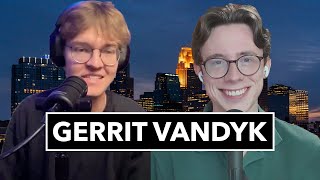
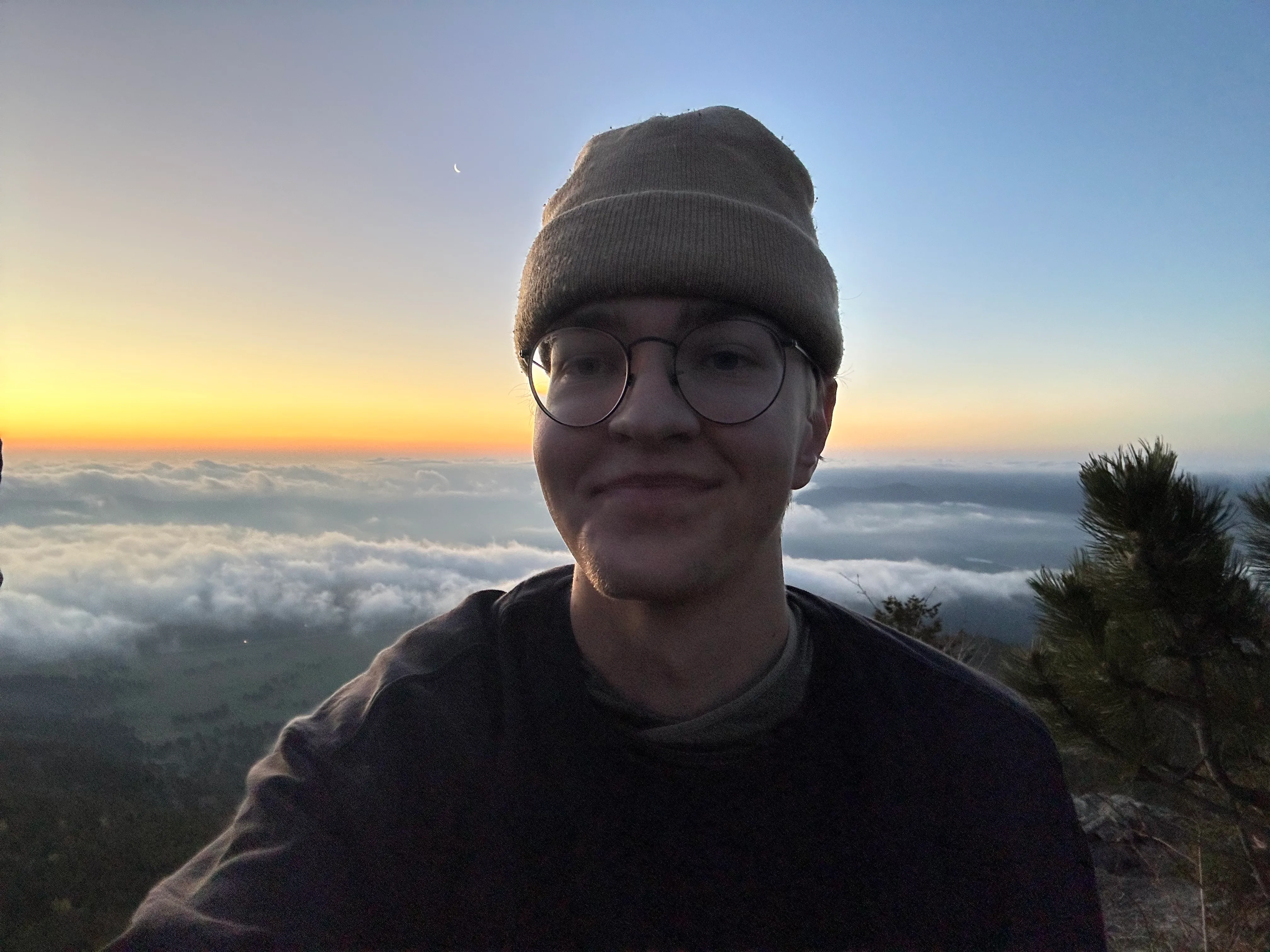
Luis Borja is a Minneapolis-based creative who shoots photos, makes videos, models, and designs clothing — all connected by a personal brand called Project Sploosh. He and Isaac connected through mutual friends Vlad Nikiforov and Henry Smisek — Luis had taken Vlad to his first college outing — and this episode was the first time the two had ever spoken. What followed was one of the most free-flowing, genuinely warm conversations in the pod: about growing up between Minnesota, Ecuador, and Costa Rica, what reading The Power of Now did to Luis’s entire worldview, and why collaboration — not hustle — is what actually opens doors.
Who Luis Borja Is and Where “Project Sploosh” Came From
Luis doesn’t fit neatly into one lane. Photography, videography, modeling, clothing design — he does all of it, and he does all of it under a brand name that came from a middle school movie night.
The story: he and his friend Dustin were brainstorming YouTube channel names for a Jackass-style challenge page they wanted to launch. They were watching the movie Holes, playing 2K, throwing names around. In the film, characters call peaches “sploosh.” Luis heard it and laughed. It stuck.
“I always saw like this vision and what like I’m going down right now it’s just a project everything in my life I have different projects I’m working on so I wanted it to be something around project but I didn’t know what the last part was.”
Project Sploosh was born. He’s been building it ever since — multiple YouTube channels, different creative phases, a life organized not as one big goal but as a series of overlapping projects. The name makes him smile when he says it. That was always the point.
Ecuador, Costa Rica, and Learning to See Life as a Series of Projects
Luis grew up moving. His dad is from Ecuador — he’d been visiting since before he could really remember. His mom is a teacher who won a sabbatical and moved the family to Costa Rica for a full year to teach elementary school. Luis didn’t want to go.
“I did not want to do it but now that I look back on it bro I was like probably one of the best things that’s probably ever happened to me.”
At the time it was hard. No friends. Didn’t know the language. Every day he came home asking to be sent to Ecuador where he at least knew people. Eventually they did — he went to school there, lived with his dad, built a life in a third place. Then back to Minnesota.
Those years shaped something that only clicked later: everywhere he went, he was working on something. A new environment. A new version of himself. A new project. Seeing his past through that lens — as a series of bubbles, each one its own chapter — gave him a framework he still uses today.
“It just gives you a feeling of gratitude for even just like walking on this planet.”
The Power of Now and What Changed When Luis Stopped Fighting the Chapter He Was In
When COVID hit, Luis had just dropped out of school in Mankato. He’d been filming, editing, and uploading every week — really grinding the creative side — and then everything stopped at once.
That’s when someone recommended Eckhart Tolle’s The Power of Now.
“I swear to God bro I changed my whole entire life my whole entire perspective on everything.”
He didn’t just read it. He implemented the practices. He stopped measuring himself against who he’d been or who he thought he should be. He focused on the chapter he was actually in — not every chapter, just this one.
The first step was simple: he grabbed his phone and filmed a room tour because that’s what he could do. Then he traveled. Shot music videos in Des Moines for the first time — a connection from high school got him three videos in exchange for a camera. Walked Mankato streets solo during lockdown. Drove out West with unemployment checks, met other creators, and kept filming everything.
The practice was the point.
No Excuses: Creating Every Day with a Cracked iPhone
One of the clearest themes in this episode is Luis’s complete rejection of gear excuses. His iPhone screen is cracked. His back camera is cracked. He uses it for almost everything.
“You gotta use what you have if you are creative and you have the job to do it you will use whatever.”
During his sales job in Illinois — door-to-door, not exactly a creative environment — he still found himself pulling out his phone mid-shift to shoot. No camera bag. Not dressed for a vlog. Didn’t matter.
“I’m still doing it like that just shows like I don’t know it just made me so happy just having like an iPhone 13.”
Isaac echoed this from his own side — the whole reason this podcast exists is to remove every possible excuse. No studio. No professional setup. If the conversation is happening, record it. His face went pixelated in a past episode because he forgot to turn a light on. He kept going.
Luis’s deeper reason for documenting everything is one of the most honest things said in this episode:
“I’m only this young right now I’m this is the youngest I’ll ever be so I need to use this to my full advantage.”
Not for views. Not for followers. So his 80-year-old self has something to look back at.
Presence, Tattoos, and the Practice of Looking at Your Hands
Luis has a mindfulness practice he’s almost embarrassed to describe because it sounds too simple. When he’s in his head — anxious, scattered, caught between past and future — he grounds himself by looking at an ordinary object. A trash can. His own hands.
“Just look at it and just be like okay that is a trash can like I can see the curvature on it like my eyes are detailed enough for me to actually see that like I’m here right now like nothing matters I don’t have a past I don’t have a future like I’m just like right here right now.”
That’s part of why some of his tattoos are on his hands. When the practice calls for it — when he needs to land back in the present — he looks down and they’re there.
“This is my human body it’s not a representation of my soul it’s my art that’s my canvas.”
The tattoos aren’t decoration. They’re anchors back to the mindsets he had when he got them — reminders of who he was trying to become at a specific moment. One on his wrist came from his time in Arizona doing the sales job he knew wasn’t his future. He got it to remind himself that the chapter would change.
Isaac has the same hand-grounding thing — independently, without ever talking about it with Luis before this call. Two people, different paths, same practice.
Collaboration Is the Career
Near the end of the episode, Luis said something that reframed the whole conversation:
“Collaboration is literally the thing that can is and can be holding you back from your next venture.”
He wasn’t being philosophical. He was being literal. The YouTube videos he uploaded consistently led to a brand deal with Manscaped. A modeling opportunity with Playboy. Those don’t happen without the public body of work — and without the visible signal that he’s open to collaborating.
Isaac pushed the same point, referencing Cade Hanson’s approach to networking and challenging Luis to start showing up to Chamber of Commerce events and local meetups. Luis said he was going to. He meant it.
The “keep going” philosophy from Josh Horton in episode 10 came up directly at the end too — Luis had heard it and connected with it immediately. Same energy, different lanes.
What’s next: a place in Minneapolis, creative roommates, more runway and portrait work, modeling agency auditions, and eventually relaunching his clothing brand — Project 118 — in whatever form feels right. The vision for that brand was always collaboration: a blank canvas where other artists could put their work, and everyone wins.
“If you need to go backwards for a little bit understand that’s okay because it’s just gonna be a slingshot.”
Key Takeaways
- Life is a series of projects. Luis’s framework for everything — his brand name, his creative output, his identity — is that each phase is its own chapter with its own lessons. Nothing is wasted.
- The Power of Now is a practice, not just a concept. Reading Tolle changed Luis’s life because he actually implemented the exercises, not just understood the ideas. Pick it up, do the work.
- No excuses to create. Cracked iPhone, wrong outfit, no camera bag — Luis shoots anyway. The creative impulse doesn’t wait for optimal conditions.
- Presence is a repeatable skill. Looking at your hands. Looking at a trash can. Grounding yourself in the physical now is simple, specific, and actually works.
- Collaboration compounds. Every video Luis uploaded publicly sent a signal he was open to working together. Manscaped and Playboy didn’t find him by accident.
- Discomfort is the signal to go, not stop. The pull to stay home and scroll is exactly when you should go to the event. That friction means something real is on the other side.
Follow Luis at instagram.com/luis.borjaa. Connect with Isaac at isaacjarnagin.com or on Instagram.