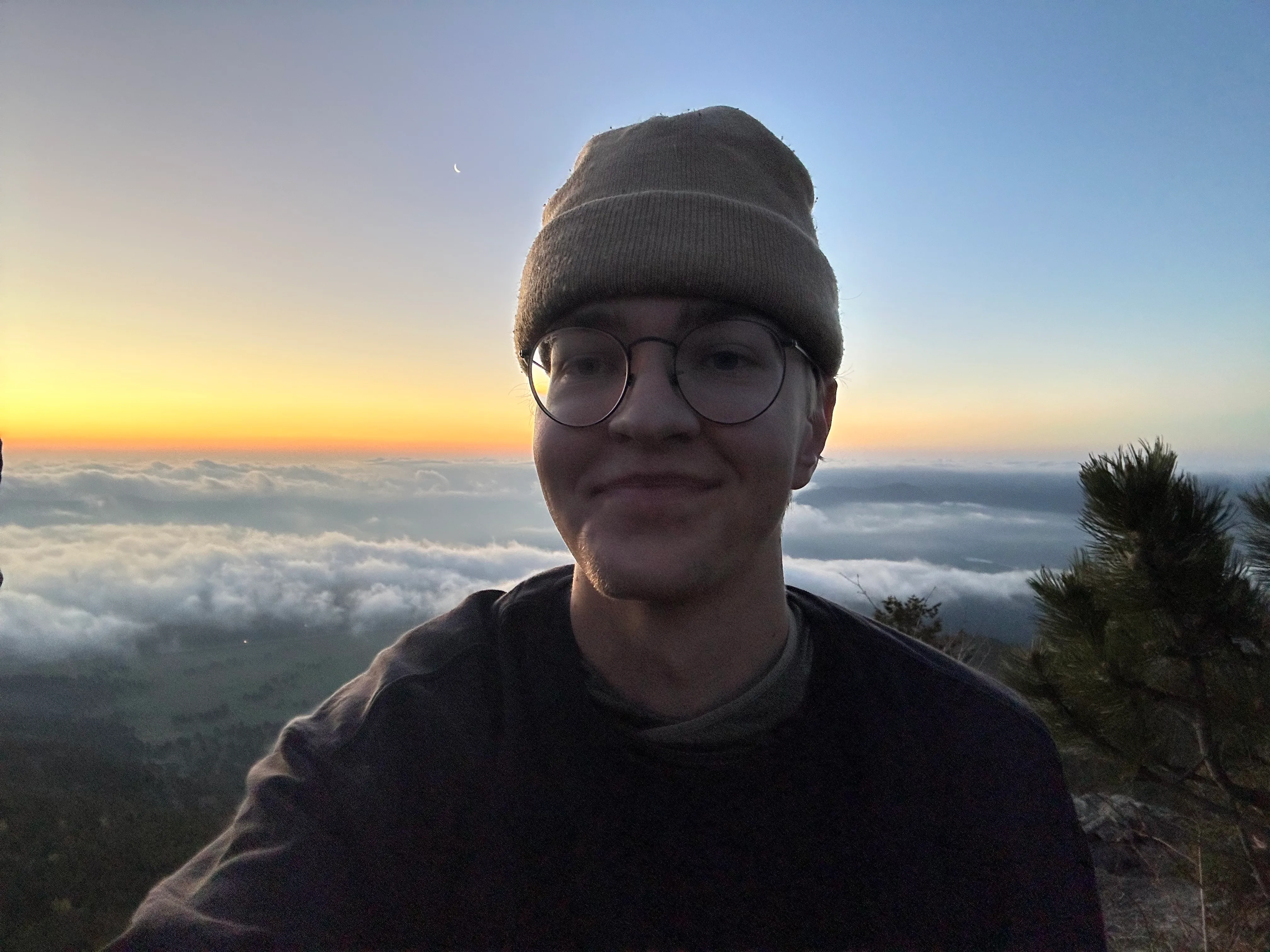
Jeremy Paredes, known online as jdopefx, was a junior at Georgia Tech running the football program’s student creative team while wrapping up an NBC Sports internship ahead of the Paris Summer Olympics. Isaac had mentioned Jeremy on the podcast many times before they ever actually spoke — Sam Musgraves had brought him up just the day before they recorded. The episode covered how a high school broadcast class turned into a D1 creative role, what it was like to pull clips during the Winter Olympics as an 18-year-old freshman, and how Georgia Tech football runs game day from card runners to recap videos.
How Jeremy Paredes Got Started
Before he had a camera, Jeremy had a phone and a soccer team that traveled to tournaments. He’d film little travel videos — the hotel, the car ride, the field — and edit them together. Casual stuff, but the habit of documenting was already forming.
Freshman year of high school, he joined his school’s audio, video, television, and film program. He picked up a school camera, went to the first football game of the year, and made a video.
“It was pretty trash but no one really did that at my high school so it was the first ever like football video that really got views and populated on everybody’s Instagram.”
He kept going — football, basketball, soccer, whatever was happening. It didn’t stay at his own school. He got connected with programs across Georgia, shooting their games too, building relationships with players who’d go on to sign with major programs.
“When I was shooting the SEC Championship game I saw a lot of players that I knew from shooting high school sports when I shot their high school games.”
He also worked with the Georgia High School Athletic Association — the GHSA — producing content for state championship games at a time when video was still new for them. He was the start of something there. What he built outlasted him.
“High school sports is where a lot of creatives find their passion for it — where they have a lot of flexibility and freedom to kind of make whatever they want.”
Building Georgia Tech’s Student Creative Team
When Jeremy arrived at Georgia Tech, the football creative team had no student members. When they recorded, it had seven or eight. He’d built that out by recruiting creatives he already knew in the Atlanta area who were planning to attend Georgia colleges.
What made Tech different from bigger programs was the opportunity structure. At top-tier football schools, freshmen often spend their first year tagging footage and logging photos. At Tech, that wasn’t the case.
“At Tech we’ve had great opportunity for freshmen to be shooting games, editing games, traveling to games — myself as a freshman I had the opportunity to travel to almost every single away game, and that was an experience like no other.”
The athletics program was also unusually open to football creatives shooting other sports. When football became all-consuming, you could cover volleyball, baseball, or basketball instead — support athletes who didn’t get as much camera attention, sharpen different skills, and come back to football fresh.
What the team looked for in prospective students reflected how seriously they took that culture.
“We’re looking for creatives who are willing to be the runner for a game.”
Jeremy himself had run cards at two home games his senior season — the student who’d been there the longest, still doing the unglamorous work.
Jeremy Paredes at the NBC Olympics
Jeremy’s path to NBC Sports came through his aunt, a video editor in the film industry, who passed along an opportunity she’d heard about. He applied for a digital production assistant position, made it through three rounds of interviews — written, then a live recorded session, then a call with the two people running NBC’s digital Olympic content — and got an offer letter.
When he arrived at NBC Sports headquarters in Stamford, Connecticut for the 2022 Beijing Winter Olympics, he’d just turned 19. Everyone else was 21, 22, 23 — already out of college, already working full-time.
“They told me I was the first ever freshman that they had working for them for the Olympics.”
He was there for four weeks — housed in a hotel, fed, running 12-hour shifts. His job was clip pulling: watch the live feeds coming in from Beijing, find the best shots, and send them to the producers and editors building segments. There were 20 or 30 people doing variations of that at once. The work wasn’t just about finding visually good clips — it required understanding the athletes and the storylines behind the footage.
“We’re not just pulling clips that look good — we’re pulling clips that mean something to a storyline, or mean something to the gold medal winning athlete, or mean something to Team USA.”
He was going back for Paris 2024. This time stepping up — not as a digital production assistant, but helping the editors directly.
What Scale Teaches You
The contrast between NBC and Georgia Tech football was stark. At Tech, Jeremy shot, edited, planned, produced, and posted. At NBC, he was a small part of a massive operation — rooms full of hard drives, live feeds coming in from across the globe, a system built to process petabytes of footage at once.
That experience did something he didn’t expect.
“When you work at NBC Sports and you are literally pulling footage 12 hours a day — it humbles you a little bit.”
Ego could find its way into the creative world — the follower count, the like count, the sense that you make cool stuff and people respond to it. Being one of dozens of assistants in a machine that large recalibrated what it actually meant to grow. He came back to Georgia Tech knowing both where he stood and where he wanted to get to.
“There are people who are producing these segments, editing these segments — and that’s where I want to get to one day.”
Game Day Workflow at Georgia Tech
For a Georgia Tech home football game, Jeremy assigned positions the week ahead: two endzone shooters, a sideline shooter, a bench cam shooter, an atmosphere shooter, and a card runner. That was the video side. Photo ran parallel — a staff photographer, a student photographer, and his boss on photographic design.
The card runner was the job that kept everything moving.
“The recap gets posted the next day at 8am — that editor has a tall task ahead of them.”
The runner pulled cards every quarter, dumped them on a laptop, batch-renamed clips in Adobe Bridge, and starred the best ones for the recap editor. Shooters marked good plays in-camera by pointing at the stadium lights, the scoreboard, or their hand — so when the runner was sorting, key moments were easy to identify without scrubbing every second. Each card went on a sticky note labeled with the shooter’s name and camera letter so nothing got mixed up.
The recap video was Jeremy’s job most of the season. Six out of seven wins that year.
Abby Szlosek, who talked through her own operation at Clemson in episode 3, had shown Jeremy their equipment checkout system — QR codes, online tracking, full accountability built into the infrastructure. Tech didn’t have that yet, and it was on the list.
Balance, Ireland, and What’s Next
Burnout had been real. Freshman year was all grind — earning his spot, building connections, logging hours.
“Burnout’s really easy when you work so many hours and you’re not enjoying college enough.”
By junior year, that had shifted. He’d picked up skiing, his brother had taught him. He got Boba when he needed it. His friend group — all collegiate soccer players, people who understood grinding toward something — kept him active and accountable. They called themselves the after game activities crew, and when they came home to train in the summers, he’d train with them.
The next big trip was Ireland. The football program was playing FSU at Aviva Stadium in Dublin in August for week zero — with College Game Day broadcasting on-site — and Jeremy was going in March with the Georgia Tech cheer team to scout the location and shoot promotional content. Aer Lingus, the game’s sponsor, was flying the football program over for the game itself.
“If I could get a stout in a pub in Ireland, that’s a good life.”
Going early meant knowing the shots before the moment arrived. Location scouting Dublin months out was its own kind of prep.
Beyond Ireland, Paris was the main focus. And beyond that, a senior year with a lot of open runway.
“Networking with other creatives, learning from other creatives — that’s the best way our community is built — through positive influence and through positive inspiration from others.”
Key Takeaways
- High school sports is where the reps happen. The game day experience, the athlete connections, the editing muscle — it all compounds before you ever reach college.
- Big productions are humbling in the best way. Working at NBC as a small part of a massive system resets your ego and clarifies where you actually want to go.
- The unglamorous jobs matter most. Running cards on game day isn’t a step back — it’s what makes the recap possible, and it’s what separates real team players from people who just want to hold a camera.
- Flexibility builds better creatives. Shooting volleyball when you’re burned out on football makes you more complete and keeps you from burning out entirely.
- Scout the location before the game. Going to Dublin months before the football game means knowing exactly what shots are available when it actually counts.
- Your network follows you. The players you film in high school show up at championship games in college. Build those relationships early, and they stay with you.
Follow Jeremy on Instagram. Connect with Isaac at isaacjarnagin.com.